Pluto in Astrology: Learn What It Means
Pluto is the transformer of the birth chart — the planet astrology links to deep power, intensity, and the cycle of death and rebirth. To be clear from the start: in astrology “death” means psychological endings and beginnings, the falling away of an old self so a truer one can emerge — not literal death, and never a prediction of it. Pluto is about profound transformation, the kind that changes you at the root.
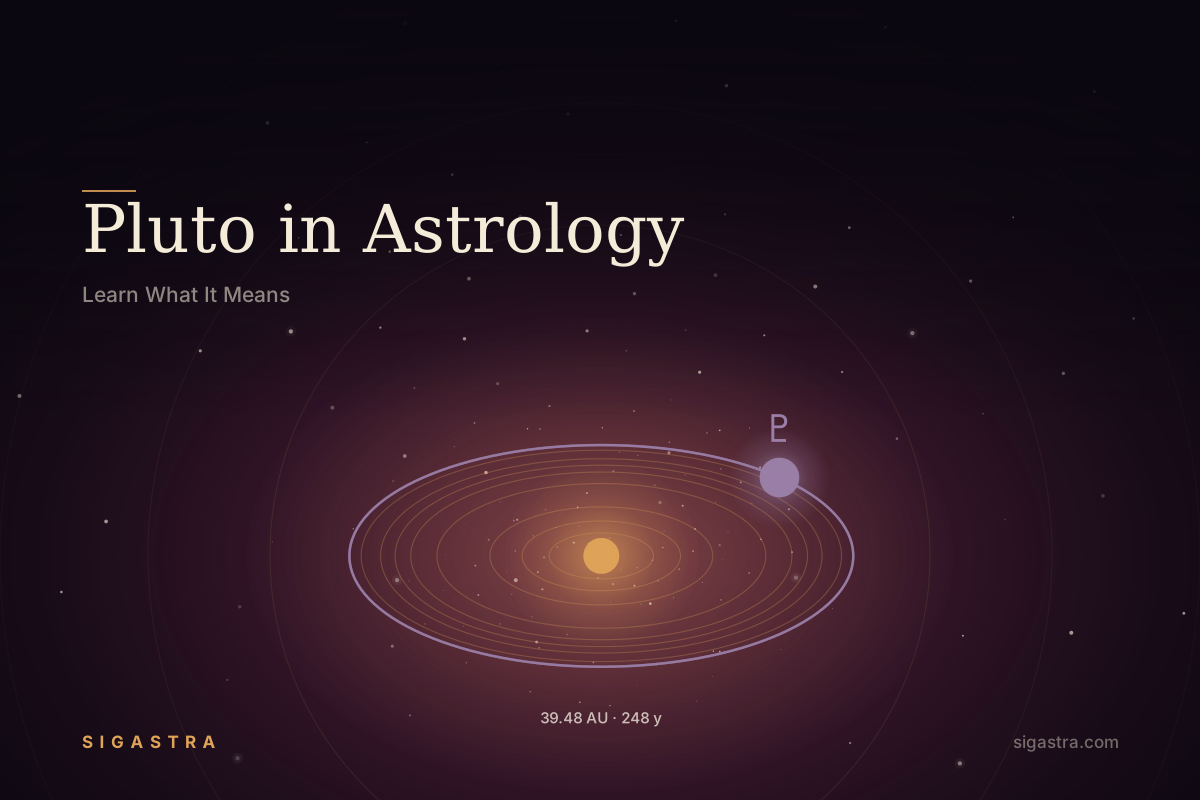
Pluto is the last and most extreme of the three outer, generational planets. Though reclassified as a dwarf planet in 2006, astrologers continue to use it, because its symbolic role in the chart remains as potent as ever. Its orbit is long — about 248 years — and highly elliptical, so it moves at wildly different speeds, spending anywhere from around twelve to over thirty years in a single sign.
What Pluto governs in the chart
Pluto is the principle of transformation through depth — the force that takes something down to its foundations, strips away what is false, and rebuilds it from the core. It rules the modern sign of Scorpio and governs everything hidden, buried and intense: the unconscious, taboo, obsession, power, and the psychological material we would rather keep in the dark. Where the personal planets describe your surface, Pluto describes the pressure underneath — the volcanic layer where real change originates.
Where Pluto sits in your chart is where you experience the most intensity and the most profound change over a lifetime — where you meet power (your own and others’), where you are pushed to confront what is buried, and where you undergo repeated cycles of ending and renewal. It can feel heavy, because Pluto does not do things by halves. Its themes include control and its abuse, obsession and healing, crisis and regeneration. Nothing Pluto touches stays superficial for long.
The gift of Pluto is empowerment through honesty — the hard-won authority of someone who has faced their own depths and survived. Its shadow is the misuse of power: manipulation, control, compulsion, or refusing to let go of what is already over. Read well, Pluto is not about morbid fascination with death; it is about the courage to let outdated versions of yourself and your life die so that something more real can be born. Every ending it brings is paired with a beginning.
Pluto through the signs: a generational planet
Pluto is the slowest and most uneven of the generational planets. Because of its long, elliptical orbit it can spend anywhere from about twelve years to more than thirty in a single sign — racing through some and crawling through others — so the size of each “Pluto generation” varies. Either way, everyone born across that span shares the same Pluto sign, which makes it a description of a generation’s collective psyche far more than of any one person.
Read at the level of whole cohorts, the Pluto sign shows where a generation is collectively pressured to transform — the area of life it will tear down, expose and rebuild, often through crisis. A generation may confront the shadow side of whatever its Pluto sign governs, dredging up what earlier eras kept buried and forcing a reckoning with power there. This is history-scale symbolism: the deep, obsessive, transformative themes an era is born to work through together.
Precisely because the sign is so broad and generational, it tells you very little about you as an individual. For personal meaning you turn to the house Pluto occupies and its aspects to your personal planets — that is where the generational pressure meets your own life and becomes specific. Sigastra locates Pluto from precise ephemeris data, so you can distinguish the generational current from your personal experience of it.
Pluto through the houses
The house Pluto occupies is where transformation concentrates in your life — the arena where you meet power, intensity and repeated cycles of death and rebirth most directly. Being tied to your exact birth chart, the house is far more personal than the generational sign, and it is usually where a Pluto reading actually becomes about you.
Pluto in the first house can give a magnetic, intense presence and a life marked by profound self-reinvention — the person who periodically becomes someone new. In the seventh it brings powerful, transformative relationships, sometimes involving struggles over control and deep psychological bonding. In the eighth, Pluto’s natural house, it intensifies themes of intimacy, shared resources, crisis and regeneration. In the tenth it can drive a hunger for influence and a career that repeatedly rises, falls and rebuilds. Wherever it lands, that area of life refuses to stay unchanged.
The invitation of a Pluto house is to work with transformation rather than against it — to loosen your grip when a chapter is genuinely over, and to reclaim your power where you have given it away. People who resist Pluto’s house often experience its changes as crises imposed from outside; people who engage it consciously become remarkably resilient, able to rebuild from almost anything. Because Pluto transits are among the longest and deepest a chart offers, it rewards study alongside the wider subject of transits.
Mythology, glyph and astronomy
Pluto is named for the Roman god of the underworld, the equivalent of the Greek Hades — lord of the dead and, importantly, of the buried wealth beneath the earth (his name is tied to the Greek word for riches). That double meaning is the key to the planet: Pluto rules not only endings and the hidden dark, but the treasure concealed within them — the power and renewal that come only from going down into what we fear and bringing something valuable back up.
The most common glyph ♇ combines the letters P and L — both the first letters of “Pluto” and the initials of Percival Lowell, whose observatory predicted and searched for the planet before its discovery in 1930. An older astrological glyph shows a small circle (spirit) held within a crescent (soul) above a cross (matter), depicting spirit reborn out of the underworld — a fitting emblem for death and rebirth.
Astronomically, Pluto is small, cold and far away, orbiting in the Kuiper Belt beyond Neptune on a path so eccentric that it sometimes comes closer to the Sun than Neptune does. It was reclassified from planet to dwarf planet in 2006 once astronomers found many similar bodies out there — yet astrologers kept using it, since its symbolic weight in the chart never depended on its size. Its full orbit takes about 248 years, and its uneven speed is why it spends so variable a time — roughly twelve to thirty-plus years — in each sign.
A quick glossary of Pluto themes
Pluto shows up in astrology under a cluster of intense words. This compact glossary keeps the core meaning — transformation through depth — clear, and keeps “death” firmly in its psychological sense rather than any literal one.
- Transformation
- Deep, root-level change — the falling away of an old self so a truer one can emerge.
- Death & rebirth
- Psychological endings and renewals, always paired: what dies makes room for what is born. Never literal death.
- Power
- Personal and shared power — its honest use for empowerment, and its shadow in control and manipulation.
- The unconscious
- The buried, hidden and taboo — the material we keep in the dark until Pluto pushes it into the light.
- Regeneration
- The capacity to rebuild from crisis — the treasure Pluto brings back up from the underworld.
- Generational planet
- A slow, uneven outer planet whose sign marks a generation’s deep themes — read the house for your own story.
Working with Pluto consciously
Pluto is easiest to live with when you stop fighting its central law: some things are meant to end. In the area its house marks, the work is to notice what has genuinely finished — a role, a relationship, a version of yourself — and to let it go with dignity rather than clutching until it is torn from your hands. Resisting Pluto tends to turn transformation into crisis; cooperating with it turns crisis into renewal.
It also asks for an honest relationship with power — reclaiming it where you have given it away, and refusing to misuse it where you hold it. That is slow, deep work, not a weekend project. Because Sigastra computes Pluto and its long transits from precise astronomical data, you can recognize these deep seasons for what they are: not omens of doom, but invitations to rebuild from the root. Astrology here is a mirror for reflection, never a prediction or a substitute for medical, legal or financial advice.
Continue learning
Frequently asked
What does Pluto mean in astrology?+
Pluto is the planet of deep transformation, power and the cycle of death and rebirth — psychological, not literal. In a birth chart it shows where you experience the most intensity and profound change, where you confront what is buried, and where you can rebuild yourself from the core. It rules Scorpio and governs the hidden, powerful undercurrents of the psyche.
Does Pluto in astrology predict death?+
No. In astrology “death” is symbolic — the ending of an old chapter, identity or pattern so something new can be born. Pluto is about psychological transformation and renewal, not literal death, and it should never be read as a prediction of it. Sigastra treats astrology as a tool for reflection, not deterministic forecasting.
Is Pluto still used in astrology if it is a dwarf planet?+
Yes. Pluto was reclassified as a dwarf planet in 2006 on astronomical grounds, but astrologers continue to use it because its symbolic role — depth, power, transformation — does not depend on its size. Sigastra calculates Pluto’s real position from ephemeris data and includes it in the chart just as astrologers have since its discovery in 1930.
Why is Pluto called a generational planet?+
Pluto’s long, elliptical 248-year orbit means it spends anywhere from about twelve to over thirty years in a single sign, so everyone born across that span shares the same Pluto sign. That makes the sign a description of a generation’s collective psyche and deep themes rather than an individual’s personality. For personal meaning, read Pluto’s house and aspects.
How long does Pluto stay in one sign?+
It varies more than any other planet. Because Pluto’s orbit is highly elliptical, it moves quickly through some signs and slowly through others — spending roughly twelve to thirty-plus years in each. Its total orbit around the Sun takes about 248 years, which is why its sign marks a broad generation while its house makes the placement personal.
Calculate your real birth chart free — every planet, sign and house computed from exact astronomy.
Calculate my birth chart