Learn Transits: Today’s Sky on Your Chart
Your birth chart is frozen — a snapshot of the sky at the minute you were born, unchanging for life. But the real planets never stop moving. Transits are what happens when today's moving planets form aspects to the fixed positions in your natal chart, and they are how astrology describes change, timing, and the seasons of a life.
The idea is simple even if the sky is busy. Right now Saturn, Jupiter, Mars, and the rest sit at real positions overhead. When one of them reaches an angle to a planet in your birth chart, astrology reads it as that transiting planet activating that part of you for a while. Some of these visits last hours; others shape years.
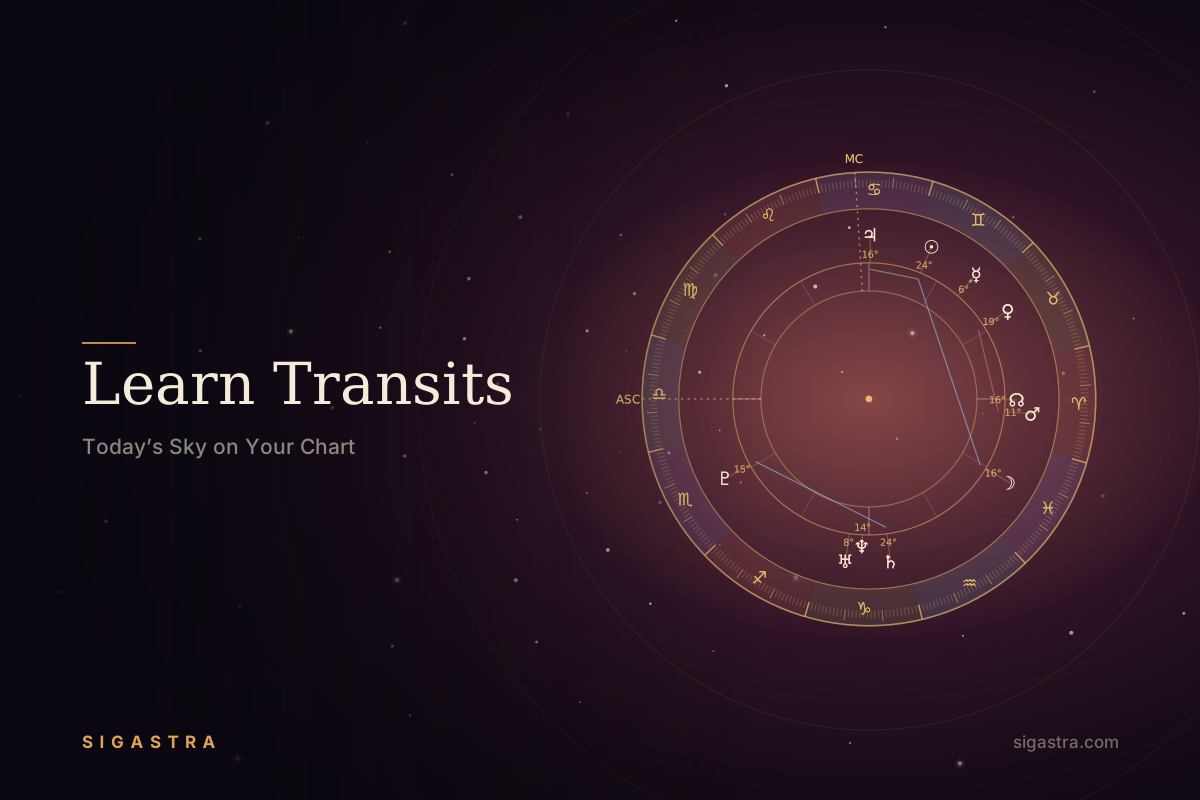
What a transit is
A transit is a relationship between a planet as it moves through the sky today and a fixed point in your birth chart. Your natal Sun, say, sits at a specific degree forever. When transiting Jupiter arrives at an angle to that degree — a conjunction, square, trine, and so on — astrology treats it as Jupiter lighting up your Sun for the duration of the contact.
This is why transits are the backbone of astrological timing. The birth chart shows your enduring nature; transits show what is being stirred, tested, or encouraged at a given moment. A transit does not rewrite who you are — it activates something already present in your chart, bringing it forward for a season.
Sigastra computes both halves from real astronomy: your fixed natal positions and the live positions of the planets today, drawn from the same ephemeris data astronomers rely on. The angle between them is measured precisely, so a transit reflects the actual geometry of the current sky against your birth moment.
Fast and slow: why speed changes everything
The single most important thing to grasp about transits is that different planets move at wildly different speeds, and speed determines how a transit feels. Fast bodies sweep past a point in hours or days and describe passing moods and small events. Slow bodies grind across a point over months or years and describe the major, life-shaping chapters.
The transiting Moon is the fastest of all, circling the whole zodiac in about a month and aspecting a given natal point for only a few hours. Its transits colour the emotional tone of a day — real but fleeting, more like weather than climate. The Sun, Mercury, and Venus move at a moderate pace, marking the rhythm of weeks.
The outer planets are the heavyweights. Jupiter takes about twelve years to circle the zodiac, Saturn about twenty-nine and a half, and Uranus, Neptune, and Pluto far longer still. When one of these forms a transit, it can stay within orb for many months, which is why outer-planet transits so often coincide with the turning points people remember for the rest of their lives.
Landmark transits everyone eventually meets
Because the outer planets move on such long cycles, certain transits arrive at roughly the same age for everyone, and astrologers treat them as rites of passage. The most famous is the Saturn return, when transiting Saturn comes back to the exact spot it held at your birth. Since Saturn takes about twenty-nine and a half years to orbit, the first return lands around ages twenty-eight to thirty and often coincides with a serious reckoning about adulthood, structure, and commitment.
There are others. A Jupiter return happens roughly every twelve years and is associated with growth and fresh horizons. Around the late thirties to early forties, several outer-planet transits cluster together in what is popularly called the midlife transits, a period linked to re-evaluation and renewal. These are shared human timings written into the mechanics of the solar system.
None of these is a fixed script. A Saturn return is not doom, and a Jupiter return is not a lottery ticket. They mark seasons when particular themes press for attention; how you meet them is yours to write.
How to read a transit
Reading a transit combines four questions. Which planet is transiting, and so what theme does it carry? What angle is it making, and so is the tone supportive or tense? Which natal planet is it contacting, and so which part of you is activated? And which house is involved, and so which area of life is in focus? Put those together and a transit reads as a short story rather than a single word.
Timing matters as much as meaning. A transit builds as the moving planet approaches exactness, peaks when the angle is precise, and fades as it separates. Slow planets can even cross the same point three times when they turn retrograde, drawing a theme out across many months in a series of chapters rather than one clean hit.
Weight the slow transits over the fast ones when you are trying to understand a period of life. A Moon transit tints an afternoon; a Saturn or Pluto transit can define a couple of years. Reading them in proportion keeps you from mistaking passing weather for a genuine turning point.
Using transits wisely
Transits are at their best as a tool for reflection and preparation. Knowing that a demanding transit is building can help you understand a stretch of pressure and meet it with intention rather than surprise. Knowing that a supportive one is near can encourage you to act on a plan you have been putting off. The value is in the self-awareness, not in the forecast.
It helps to remember that a transit activates potential already in your chart; it does not import an outside fate. Two people under the same transit will live it differently, because it works through their unique natal patterns and their real circumstances and choices.
Sigastra tracks transits from precise, live astronomy and offers them as a mirror for self-knowledge, never as deterministic prediction. Astrology can help you reflect on the timing and texture of a season, but it is not a source of medical, financial, or legal advice, and the meaningful decisions always remain yours.
Transits, returns, and progressions
Transits are the most direct timing technique, but they are not the only one, and it helps to know how they sit alongside their cousins. A return is really a special transit: the moment a planet comes back to its exact natal position, as in the Saturn return or the Solar return that recurs near your birthday each year. Returns are landmark moments within the broader flow of ongoing transits.
Progressions are a different idea altogether. Rather than tracking where the planets actually are today, a common method called secondary progressions symbolically advances your chart by counting each day after birth as a year of life. It describes slow inner development — the way your character matures — whereas transits describe the outer sky pressing on you in real time. Many astrologers read the two together, one for inner growth and one for external timing.
For a beginner, transits are the natural place to start because they are the most tangible: the planets forming those angles are genuinely overhead right now, computed from real astronomy. Returns give you memorable milestones to anchor to, and progressions can wait until the basics feel comfortable. All of them are best held as prompts for reflection rather than a calendar of fixed events.
One caution ties the whole subject together. It is tempting, once you can track transits, to want a forecast for every week — but astrology reads best in broad strokes and honest reflection, not in fine-grained prediction. Use the slow transits to understand the chapter you are living, notice the returns as they arrive, and let the fast movers colour the day. The value grows from self-awareness over time, not from trying to pin the future to a date.
Continue learning
Frequently asked
What is the difference between my birth chart and a transit?+
Your birth chart is fixed for life, a snapshot of the sky at your birth. A transit is where the planets are today forming an aspect to that fixed chart, which is how astrology tracks change and timing.
What is a Saturn return?+
It is the transit when Saturn returns to the exact position it held at your birth, which takes about twenty-nine and a half years. The first one arrives around ages twenty-eight to thirty and often marks a serious step into adulthood.
Why do some transits feel bigger than others?+
Speed is the reason. Fast bodies like the Moon aspect a point for only hours and colour passing moods, while slow outer planets stay in contact for months and tend to shape the major chapters of a life.
Can a transit repeat?+
Yes. When a slow planet turns retrograde it can cross the same point in your chart up to three times, drawing a single theme out across many months in a series of related phases rather than one brief hit.
Do transits predict what will happen to me?+
No. A transit activates potential already in your chart and marks a season when certain themes press for attention. How you respond depends on your choices and circumstances, so it is best used for reflection, not prediction.
Calculate your real birth chart free — every planet, sign and house computed from exact astronomy.
Calculate my birth chart